

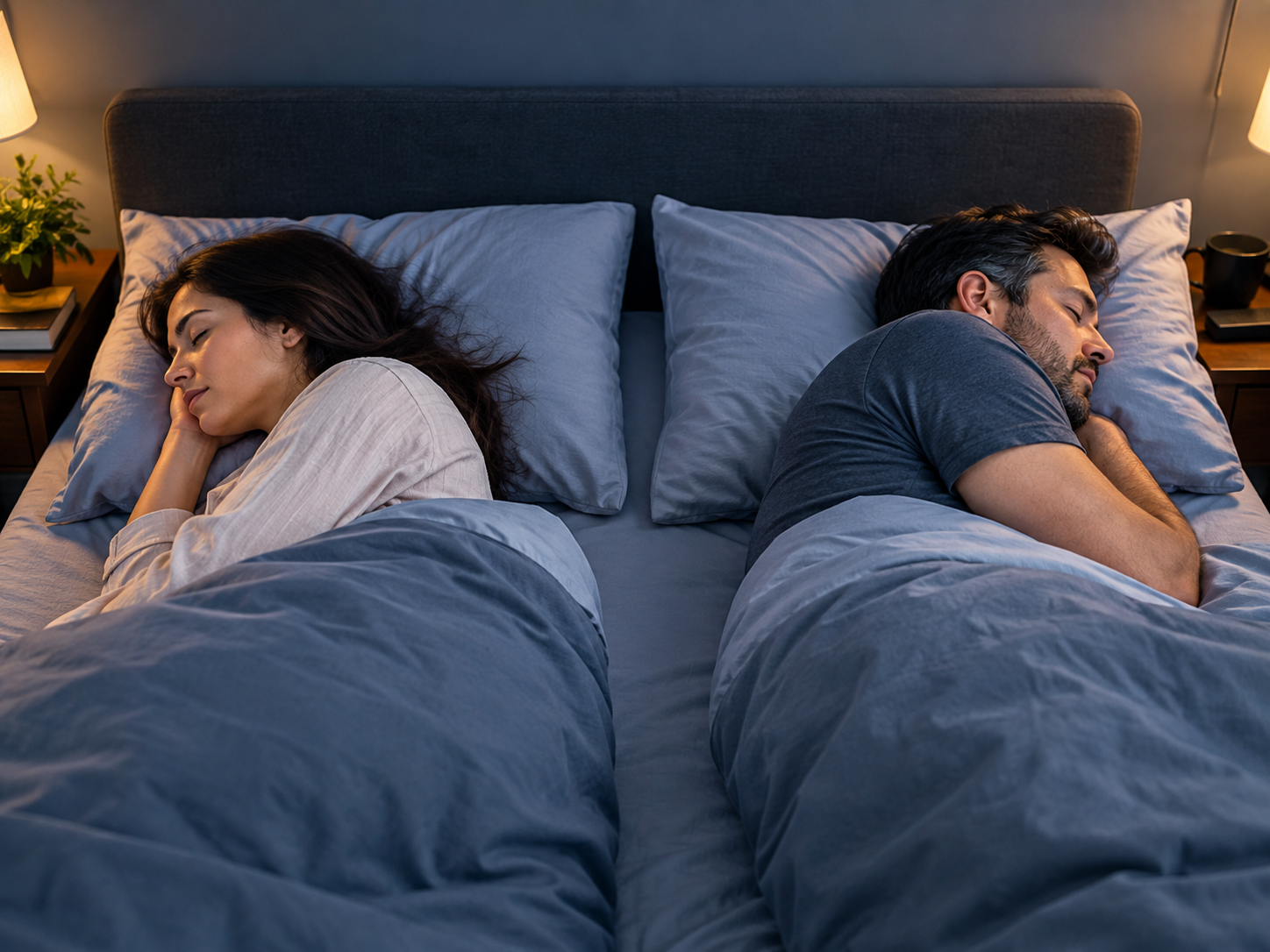
Sleep divorce is one of the most talked about relationship decisions of 2026. The name sounds dramatic. The reality is a lot more practical.
It simply means sleeping in separate beds or separate bedrooms. Not because a relationship is failing. Because sleep is that important and sharing a bed is quietly destroying it for millions of couples.
Google searches for sleep divorce spiked by 478 percent in a single week. One in four couples now sleep separately at least sometimes, according to the American Academy of Sleep Medicine.
What Is Sleep Divorce?
Sleep divorce is when two people in a committed relationship choose to sleep in different beds or rooms to improve their individual sleep quality.
It does not mean the relationship is in trouble. It does not mean intimacy is gone. It means both people have decided that showing up rested matters more than sharing a mattress.
The term went viral on TikTok when Swedish influencer Cecilia Blomdahl posted about the Scandinavian sleep method, getting over 2.5 million views on one video.
Why Women Are Choosing It
Women are more likely to have sleep disrupted by a partner than men are. Snoring, different schedules, light sensitivity and temperature differences hit women harder because female sleep is more easily interrupted.
Poor sleep in women is directly linked to increased cortisol, worse mood regulation, weight gain and relationship conflict. Fixing the sleep fixes everything downstream.
Research shows that women in unhappy sleep situations experience severe multi-dimensional depletion. The nervous system never gets the recovery it needs when sleep is consistently broken.
Does Sleep Divorce Hurt Intimacy?
This is the question every couple asks. The research says no, when it is done with communication and intention.
Couples who sleep separately by choice consistently report higher relationship satisfaction than couples who share a bed and sleep badly together.
Resentment from poor sleep does far more damage to intimacy than separate sleeping arrangements ever could.
Intimacy is a choice you make when you are awake. Sleep is something your body does whether you choose it or not.
How to Have the Conversation
Bring it up as a sleep improvement conversation, not a relationship problem conversation.
Start with a trial period of two to four weeks rather than a permanent decision.
Keep a short bedtime ritual together before going to separate rooms. Ten minutes of connection maintains closeness.
Name the real issue honestly. Snoring, insomnia, anxiety, temperature, different schedules. The more specific you are, the less threatening the conversation feels.
What the Research Actually Says
A study by the American Academy of Sleep Medicine found that 45 percent of men and 25 percent of women occasionally or consistently sleep in a separate room from their partner.
Millennials are the generation most likely to try sleep divorce and frame it positively as a wellness choice rather than a relationship warning sign.
Sleep medicine experts consistently say that prioritising sleep quality improves relationship quality because irritability, emotional dysregulation and conflict all worsen significantly with sleep deprivation.
Is It Right for You?
It is worth trying if either of you is consistently sleep deprived. If snoring or different schedules are causing real daily conflict. If you wake up irritable and it is affecting how you treat each other.
It is not a fix for deeper relationship issues. But for couples whose only real problem is poor shared sleep, it may be one of the most practical decisions available.
For the career energy and performance that good sleep directly supports, read our guide on setting boundaries at work. For the financial habits that reduce stress and improve sleep quality, see our money habits to build wealth guide.
For the hormonal side of sleep disruption in women, ImproveHerHealth’s guide on luteal phase symptoms explains why sleep gets harder in specific phases of the cycle.
External reference: American Academy of Sleep Medicine | Sleep Foundation on Couples and Sleep
Frequently Asked Questions
What is sleep divorce?
Sleep divorce is when a couple chooses to sleep in separate beds or rooms to improve individual sleep quality. It is a practical wellness decision and does not indicate relationship problems when it is a mutual and communicated choice.
Is sleep divorce becoming more common?
Yes. According to the American Academy of Sleep Medicine, one in four couples sleep separately at least occasionally. Millennials are the generation most likely to describe it positively as a sleep quality improvement strategy rather than a relationship red flag.
Does sleeping in separate beds hurt a relationship?
Research consistently shows it does not when it is a mutual, communicated decision. Couples who sleep apart by choice report higher relationship satisfaction than couples who share a bed and sleep poorly. Chronic sleep deprivation causes far more relationship damage than separate beds.
How do I bring up sleep divorce with my partner?
Frame it as a sleep improvement conversation rather than a relationship concern. Propose a short trial of two to four weeks and keep intentional connection rituals before and after sleep to maintain closeness and reassure your partner.
Can couples still be intimate after a sleep divorce?
Yes. Intimacy is about the quality of time spent together when awake. Sleeping separately has no negative impact on physical intimacy when the decision is mutual. Many couples report feeling more connected during waking hours when both are consistently well rested.